What Size Rug for a King Size Bed?
Interactive 2D visualizer to test 9 × 12, 8 × 10, and 10 × 14 area rugs under a Standard King Bed (76" × 80").
📏 2D Spatial Clearance Inspector
Interactive 2D room layout with live door swing & walkway clearance detection.
Designer Sizing Advice Optimal Fit
For KING BED: Use an 8×10' or 9×12' rug leaving 18-24" border. In tighter rooms, place rug under lower 2/3 of bed.
📐 Spatial Clearance & Layout Matrix
Perimeter floor margins, furniture leveling, and walkway safety clearances calculated for standard room layouts.
10' × 12' (Tight Room)
King Bed (76" × 80")
"Best for tight rooms where large area rugs would block entry or closet doors."
11' × 13' (Compact)
King Bed (76" × 80")
"Budget-friendly standard; covers foot and side landings without overcrowding."
12' × 14' (Standard)
King Bed (76" × 80")
"Clean modern look; prevents rug bunching behind headboard in standard bedrooms."
14' × 16' (Master Suite)
King Bed + 2 Nightstands
"Architectural Recommended Standard for King Beds; provides ultra-luxurious barefoot comfort."
15' × 18' (Large Master)
King + Bench + Nightstands
"Anchors full master suite furniture grouping and prevents end-of-bed bench wobble."
16' × 20'+ (Grand Master)
King + Sitting Lounge
"Grand luxury estate scale; prevents acoustic echo and floating furniture feel."
18' × 22'+ (Penthouse)
Grand King + Footboard
"Maximum opulence; requires large room to avoid wall bunching."
🛍️ Recommended 9x12 ft Area Rugs & Accessories
Curated top-rated area rugs and accessories sized for king bed layouts.
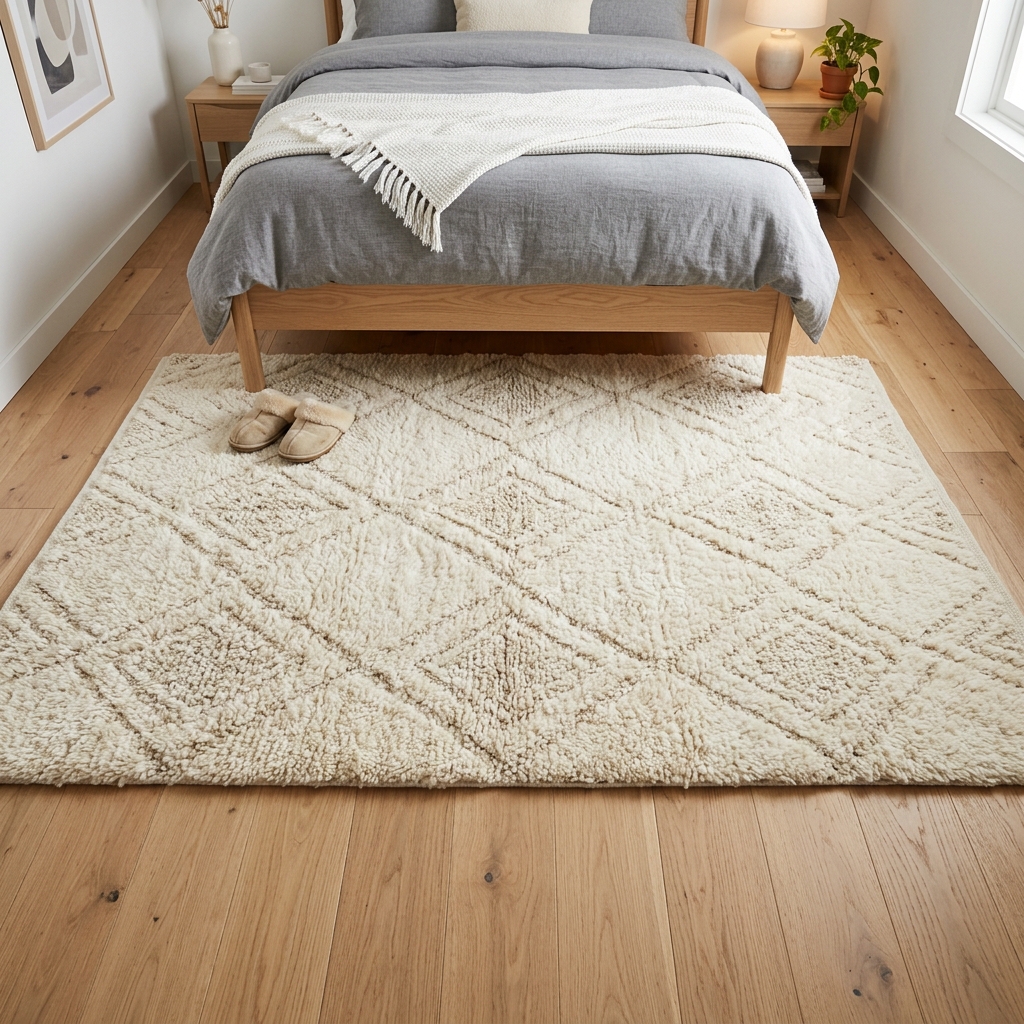 Top Pick for Bedroom
Plush Washable Berber 9x12 ft Bedroom Rug
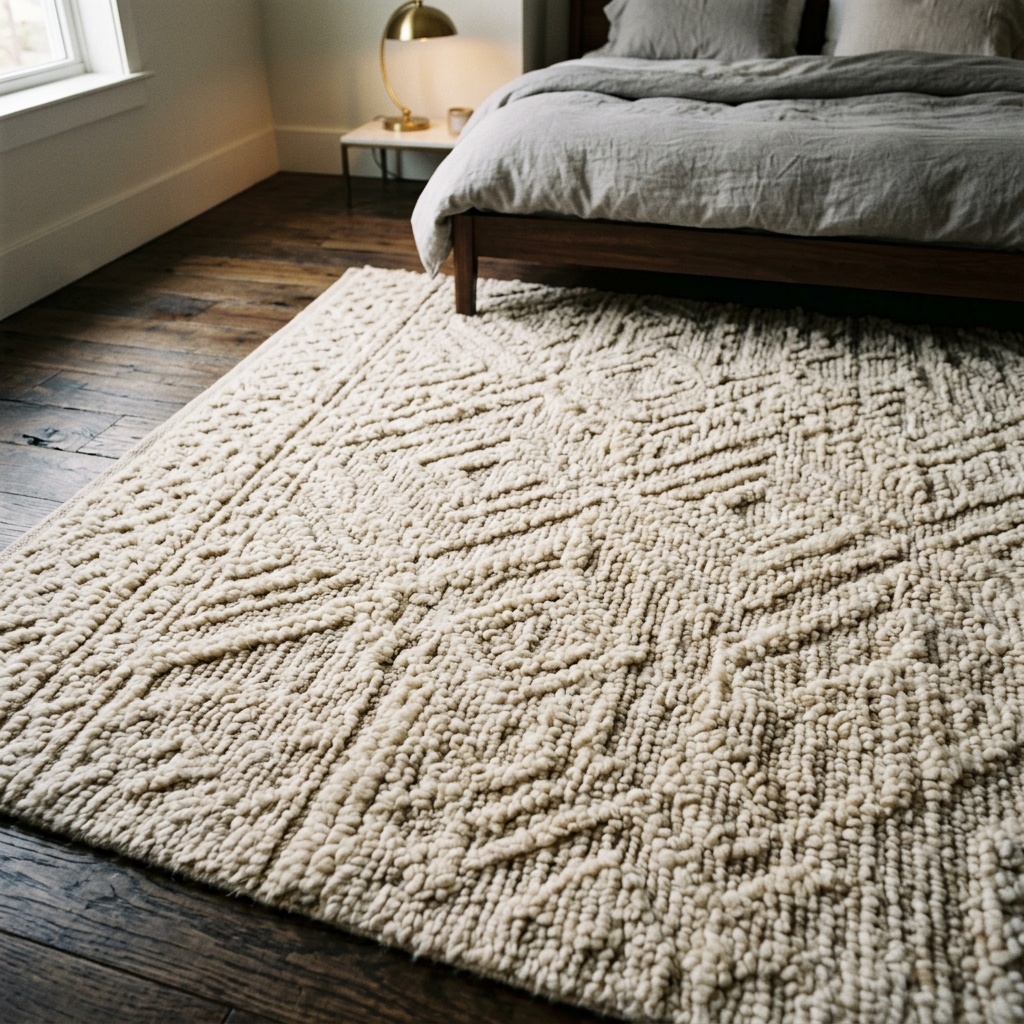 Best Comfort Underfoot
Hand-Tufted Wool Plush 9x12 ft Bedroom Rug
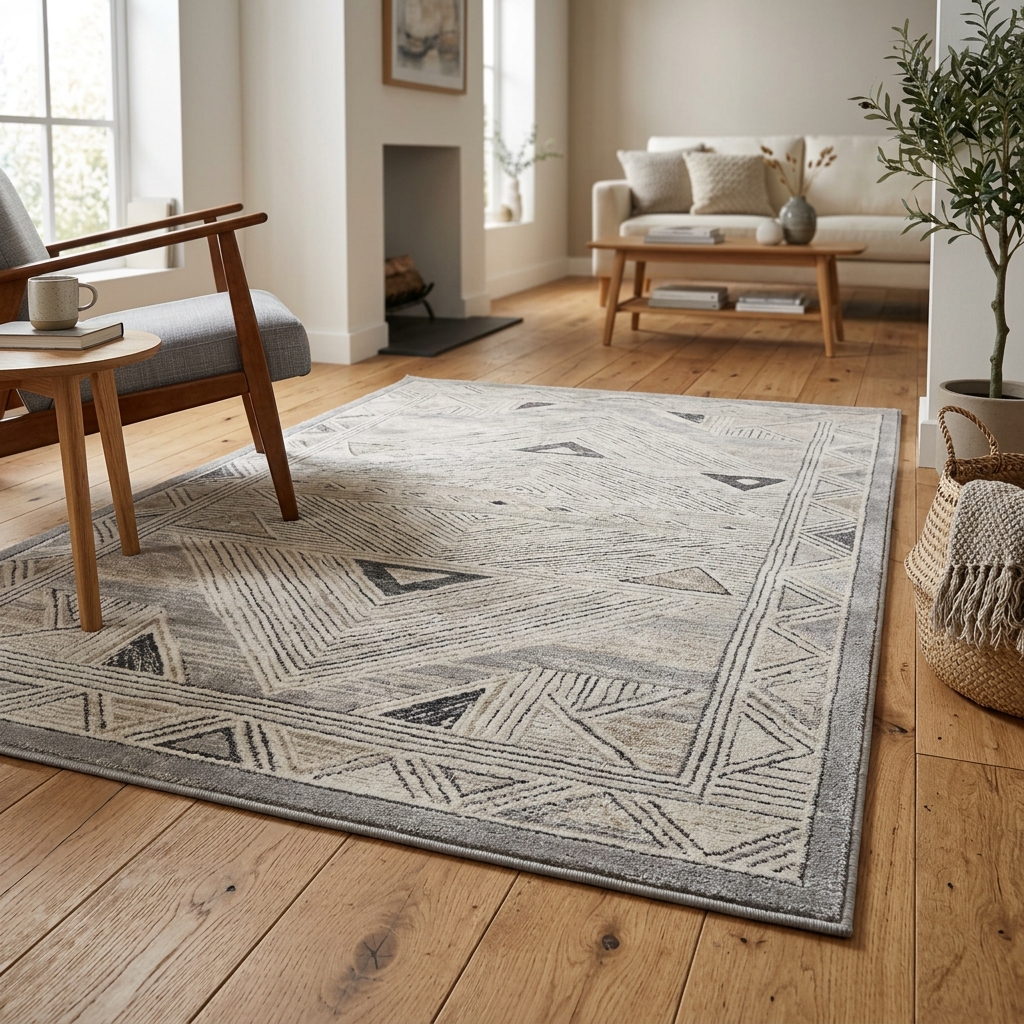 Low Maintenance
Ultra-Soft Modern Geometric 9x12 ft Area Rug
🛡️ Essential Floor Protection Add-Ons
Dual-Surface Non-Slip Felt Rug Pad (9x12 ft)
Prevents slipping, protects hardwood floors, adds 1/4" plush cushioning.
Heavy-Duty Gripper Rug Tape (8-Pack)
Stops rug corners from curling & tripping hazards.
As an Amazon Associate, RugSize earns from qualifying purchases. Product availability and pricing are subject to change on Amazon.
💡 Placement Guidelines & Rules
Recommended Standard Layout
Place a 9x12 ft rug horizontally under the bed so all 4 nightstand legs rest on the rug with 24" exposed border.
Lower 2/3 Option
Place an 8x10 ft rug stopping just short of your nightstands for tighter 12x14 ft bedrooms.
Walkway Safety
Ensure at least 18 inches of floor space remains between rug edges and bedroom walls.
❓ Frequently Asked Questions
Expert answers to common spatial clearance, placement rules, and door swing dilemmas.
Q:What is the absolute best rug size for a King size bed?
A 9' × 12' area rug is the interior design Recommended Standard for a Standard King bed (76" x 80"). It provides a luxurious 24 inches of soft landing on both sides and at the foot of the bed while fully accommodating two 24"–30" nightstands on the rug surface.
Q:Can you put an 8' × 10' rug under a King bed without looking cheap?
Yes, an 8' × 10' rug works well if placed horizontally under the lower two-thirds of the bed frame (stopping 12–18 inches in front of your nightstands). This leaves 16 inches of exposed rug on each side and 24 inches at the footboard while keeping nightstands level on bare flooring.
Q:Should nightstands sit on or off the rug with a King bed?
With a 9' × 12' or 10' × 14' rug, both nightstands should sit completely on the rug (all 4 legs). With an 8' × 10' rug, nightstands should sit completely off the rug on bare flooring. Never place nightstands half-on and half-off a rug, as this creates a dangerous tilt for lamps and beverages.
Q:How many inches of rug should stick out around the perimeter of a King bed?
Architectural standards require 18 to 24 inches of exposed rug extending beyond the mattress edges. Anything less than 12 inches feels disproportionate ("postage stamp effect"), while more than 36 inches can overwhelm standard 12' × 14' bedrooms.
Q:How much floor space should remain between the rug edge and bedroom walls?
Maintain an exposed bare floor border of 12 to 18 inches (or up to 24 inches in large master bedrooms) between the rug edge and baseboards to frame the room and ensure room doors swing open without catching rug pile.